Are Yoga Props Only for Beginners? How the Right Support Can Transform Your Practice
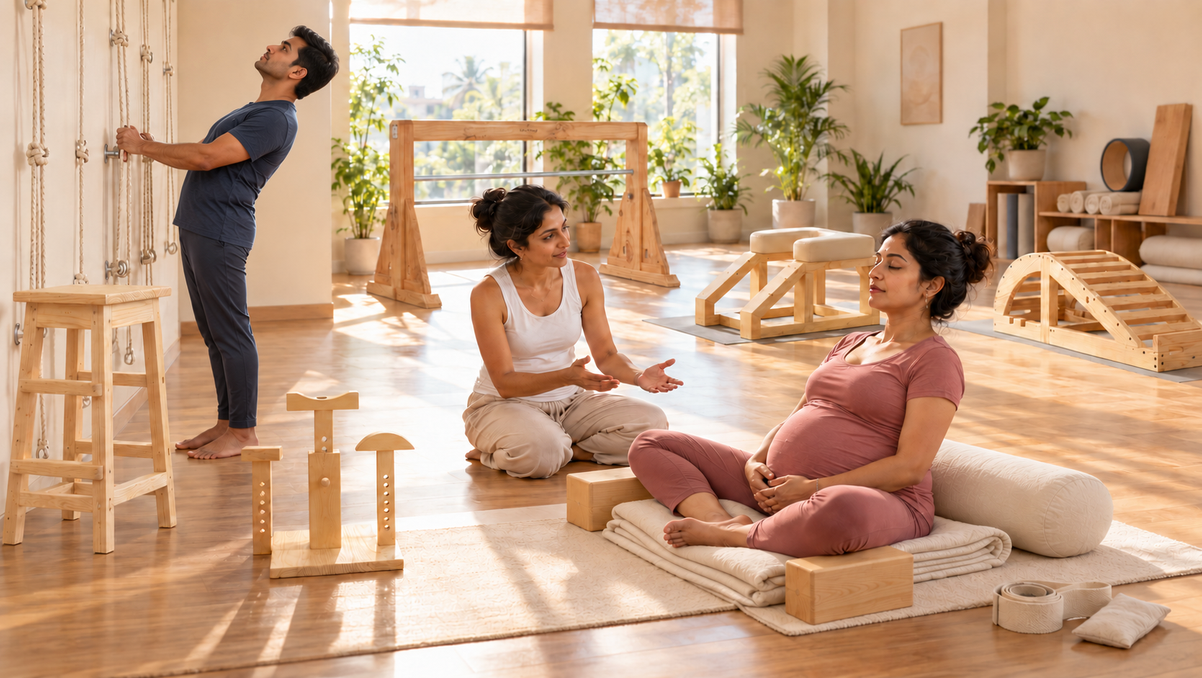
Some people hesitate to use a block, belt or chair during Yoga because they believe props make the practice easier or less authentic.
The opposite is often true.
A thoughtfully selected prop can make an asana more precise, accessible and appropriate for the practitioner. It may provide stability, improve awareness of alignment or allow the body to experience a posture without unnecessary strain.
Yoga props are not shortcuts. They are tools for learning.
Why Are Props Used in Yoga?
Every person has a different body, level of mobility, medical history and experience. Expecting everyone to perform an asana identically may encourage force or compensation.
Props may help practitioners:
- Understand the actions of an asana
- Work with better alignment
- Practise within an appropriate range of movement
- Develop balance and stability
- Reduce unnecessary strain
- Remain in supported postures for longer
- Experience the relationship between effort and relaxation
- Progress gradually and confidently
B.K.S. Iyengar refined the use of props to make asanas accessible to people of different ages, abilities and physical conditions. Props are equally valuable for experienced practitioners who wish to study familiar postures more deeply.
Props Are Not Only for People With Limited Flexibility
A beginner may use a block because the floor feels too far away. An experienced practitioner may use the same block to examine the position of the pelvis, spine or shoulders.
A belt may help one person reach the feet without rounding the back. For another, it may provide resistance and encourage muscular engagement.
The value of a prop depends on how and why it is used. Its purpose is not merely to make a posture easier, but to make the practice more intelligent.
Yoga Props Available at Samyah Wellness
Samyah Wellness has an extensive collection of Yoga props that allows teachers to adapt the practice to different bodies and requirements.
Blocks, Belts and Wooden Supports
Foam and wooden blocks bring the floor closer and support different parts of the body. Yoga belts extend reach and help practitioners maintain direction without forcing a joint.
Triangular blocks and slanting planks alter the angle between the body and the floor. They may be placed beneath the hands during Adho Mukha Svanasana, under the heels or in other carefully selected positions.
Our Stump Set provides a larger, firm and adjustable support surface. It may be used for alignment work, supported backbends and postures in which regular blocks do not provide sufficient height or stability.
Bolsters, Blankets and Smaller Supports
Bolsters provide broad, comfortable support for restorative asanas, gentle Yoga and relaxation.
Cotton Yoga blankets can be folded to support the head, shoulders, knees or hips. Pranayama pillows provide narrower support during selected breathing and reclining practices, while eye pillows may be used during relaxation to reduce visual stimulation.
These props are simple, but the height and placement can significantly change how the posture is experienced.
Yoga Chair and Yoga Stool
The Iyengar Yoga Chair with a flat seat may be used in standing poses, seated movements, supported twists and backbends.
The wooden Yoga Stool offers a higher and stable surface for balance, standing variations, rotations and supported movements. It may be helpful when transitioning to the floor is difficult or when the teacher wants to change the practitioner’s relationship with gravity.
Wall Ropes
Wall ropes can provide directional support, feedback and stability. They may help practitioners create space, explore alignment or experience selected postures with reduced muscular effort.
Rope practice should always be taught by someone familiar with the equipment. Correct positioning and adjustment are essential.
Trestle or Horse
The large Trestle, also known as the Horse, is a sturdy wooden structure used for supported inversions, back extensions, standing poses and other alignment-based practices. Its stable construction allows the practitioner to focus on the action of the asana.
Viparita Dandasana Bench
The curved Viparita Dandasana Bench supports the spine during selected backbending and restorative practices. It can help distribute the shape of the backbend across a wider area.
The practitioner’s mobility, comfort and health considerations must be assessed before using it.
Headstand Bench
The Headstand Bench supports the shoulders while keeping the head free during a supported inversion. This can reduce direct loading on the head and neck compared with a traditional headstand.
However, the bench does not make inversions suitable for everyone. People with neck concerns, glaucoma, uncontrolled blood pressure or other relevant medical conditions should seek professional advice.
Yoga Wheel Pro
The Yoga Wheel Pro may be used for mobility work, supported backbends, balance and opening the front of the body.
Because the wheel can move, it requires greater control than a fixed bench. Beginners should use it only under appropriate supervision.
Can Props Support Prenatal and Postnatal Yoga?
During pregnancy, changes in balance, joint stability, breathing and energy levels may require modifications. Chairs, bolsters, blocks, belts, blankets, walls and stools can provide carefully positioned support.
Props may help create space for the abdomen, reduce balance demands and make resting positions more comfortable. However, a prop does not automatically make every asana safe during pregnancy.
Prenatal Yoga should be guided by a qualified teacher after medical clearance. Postnatal practice should progress gradually and consider the type of delivery, healing, abdominal recovery and any pelvic-floor concerns.
When Can Props Be Helpful?
Props may be useful when:
- You are beginning Yoga
- A posture causes strain or instability
- You have limited mobility
- You are returning after an injury or a long break
- You require a gentler or restorative practice
- You are practising during pregnancy or after childbirth
- You want to study alignment more carefully
- Your teacher wants to highlight a specific action
Incorrect placement can create instability or redirect pressure to the wrong area. Specialised equipment should therefore be used under supervision.
Prop-Supported Yoga at Samyah Wellness
Our collection includes Yoga stools, a Headstand Bench, Stump Set, large Trestle or Horse, Viparita Dandasana Bench, Yoga chairs, belts, triangular blocks, wooden blocks, bolsters, Pranayama pillows, cotton blankets, eye pillows, wall ropes, a Yoga Wheel Pro and slanting planks.
Whether you are new to Yoga, working on alignment, seeking a gentler practice or requiring thoughtfully planned modifications, the right support can help you practise with greater awareness.
To enquire about Yoga sessions at Samyah Wellness in Borivali West, call 9222 132 132. Prior appointment is required.
Frequently Asked Questions
No. Beginners and experienced practitioners can both use props to improve accessibility, alignment and understanding.
No. Props allow you to practise within your present range instead of forcing the body.
Specialised props should first be used under the guidance of a teacher familiar with the equipment.
They can support appropriately modified prenatal Yoga, but the practice must consider medical guidance, the stage of pregnancy and individual requirements.