Ice Bath Therapy: Is It Really Helpful for Muscle Recovery?
Ice baths are no longer limited to professional athletes. Today, runners, fitness enthusiasts and people with physically demanding routines are exploring cold-water immersion as part of their recovery.
But does sitting in cold water genuinely help? How long should you stay in an ice bath? And is it safe for everyone?
Here is what you should know before trying Ice Bath Therapy.
What Is Ice Bath Therapy?
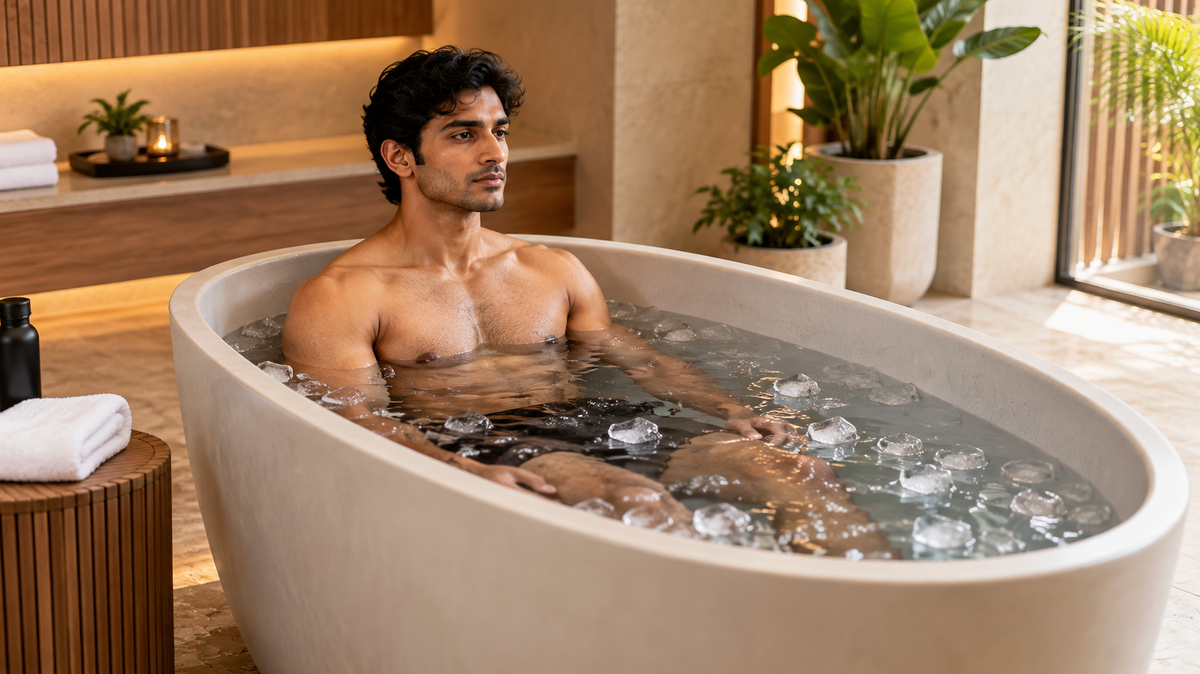
Ice Bath Therapy, also known as cold-water immersion, involves immersing the body in carefully monitored cold water for a limited period.
The sudden drop in skin temperature causes blood vessels near the surface to constrict. Breathing, heart rate and blood pressure may also increase temporarily as the body reacts to the cold.
This initial reaction is known as the cold-shock response. It is one of the main reasons an ice bath should be approached gradually, especially by beginners. American Heart Association
Why Do People Take Ice Baths?
People commonly consider an ice bath after:
- Functional Training or strength training
- Running and endurance activities
- Competitive sporting events
- An unusually demanding workout
- Experiencing post-exercise muscle soreness
- Periods of intense physical training
Research suggests that cold-water immersion may help reduce delayed-onset muscle soreness after exercise. However, results vary depending on the activity, water temperature, duration and the individual. PubMed
An ice bath should not be promoted as a cure for injuries or a guaranteed method of improving performance.
What Does an Ice Bath Feel Like?
The first few moments are generally the most challenging. You may initially experience:
- A sharp sensation of cold
- Faster or deeper breathing
- An immediate urge to leave the water
- Tightness in the immersed muscles
- Tingling or temporary numbness
- Shivering
The focus should be on remaining calm and gradually bringing the breathing under control. You should never be forced to stay in the water.
The session must be stopped if you experience severe pain, chest discomfort, dizziness, confusion, breathing difficulty or excessive loss of sensation.
How Long Should You Stay in an Ice Bath?
Longer does not necessarily mean better.
The appropriate duration depends on the water temperature, previous experience, health status and individual tolerance.
At Samyah Wellness, first-time and second-time clients generally begin with approximately five to six minutes. The duration may be increased gradually only when appropriate and according to the person’s response.
The objective is controlled exposure, not a competition to remain in the water for the longest time.
What Happens During a Session at Samyah Wellness?
Before the session begins:
- The process and safety precautions are explained
- Your blood pressure is checked
- Relevant medical conditions and medications are discussed
- The water temperature and session duration are monitored
- Beginners are guided through the initial cold response
You will enter the bath gradually and be encouraged to maintain calm, controlled breathing.
The session is supervised, and you may leave the bath at any point if you become excessively uncomfortable or feel unwell.
After leaving the bath, you should dry yourself, change into warm clothing and allow the body to warm gradually.
Should You Take an Ice Bath After Every Workout?
Not necessarily.
An ice bath may be considered when short-term recovery is the priority, such as after a demanding workout, sporting event or competition. However, it may not need to be used after every exercise session.
Exercise creates signals that help the body adapt and become stronger. Using cold-water immersion immediately after every strength-training session may interfere with some of these natural training adaptations.
The timing and frequency should depend on whether your priority is:
- Immediate recovery
- Athletic performance
- Muscle development
- Managing temporary soreness
- General wellbeing
An ice bath cannot replace hydration, nutritious food, adequate sleep or properly planned rest.
Can an Ice Bath Treat an Injury?
An ice bath may temporarily reduce the perception of soreness, but it does not diagnose or treat an underlying injury.
Persistent pain, swelling, weakness, instability or restricted movement should be assessed by a qualified physiotherapist or doctor.
Feeling less pain after cold exposure does not necessarily mean that an injury has healed.
Who Should Avoid Ice Baths?
Cold-water immersion may not be suitable for everyone. Medical clearance should be obtained if you have:
- Heart disease or a history of cardiac problems
- Uncontrolled high or low blood pressure
- An irregular heartbeat
- Circulatory problems
- Raynaud’s phenomenon
- Reduced sensation or peripheral neuropathy
- Diabetes with nerve or circulation complications
- Respiratory conditions aggravated by cold
- A history of fainting or seizures
- Open wounds or skin infections
- A recent operation
- Pregnancy or suspected pregnancy
- A current fever, infection or serious illness
Sudden cold exposure temporarily places additional stress on the heart and circulation. People with cardiovascular conditions should consult their doctor before attempting an ice bath. American Heart Association
How Should You Prepare?
Before your appointment:
- Eat an appropriate meal beforehand
- Remain adequately hydrated
- Avoid alcohol
- Inform the team about medications and medical conditions
- Bring suitable swimwear and a towel
- Do not attend if you are feeling unwell
- Avoid treating the experience as an endurance challenge
Clients may bring their own towel. A towel can also be provided at Samyah Wellness for ₹50.
Ice Bath Therapy at Samyah Wellness
At Samyah Wellness in Borivali West, Ice Bath Therapy is offered in a supervised environment. Blood pressure is checked before the session, and beginners start with shorter exposure according to their comfort and response.
We maintain realistic expectations. An ice bath may support short-term post-exercise recovery and help reduce the perception of muscle soreness, but it is not a medical treatment or a replacement for Physiotherapy.
To book an Ice Bath session at Samyah Wellness, WhatsApp 9222 132 132. Prior appointment is required.
Frequently Asked Questions
The initial cold can feel intense, but it should not cause severe pain. The session should be stopped if you experience chest discomfort, dizziness, breathing difficulty or excessive numbness.
No. Beginners at Samyah Wellness generally start with approximately five to six minutes, depending on their response.
It may temporarily reduce post-exercise soreness for some people, but individual results vary.
Not necessarily. Its use should depend on your training goals, recovery needs and overall health.
Supervision is preferable, particularly for beginners, because cold water can rapidly affect breathing, circulation and coordination.