Red Light Therapy: What Does It Actually Do, and Is It Worth Trying?
Red Light Therapy has become increasingly visible in wellness centres, physiotherapy clinics, fitness facilities and skincare practices.
Supporters associate it with recovery, skin health and inflammation management. At the same time, online conversations often make it sound like a cure for everything.
So, what does Red Light Therapy actually do, what does a session feel like and who should approach it with caution?
What Is Red Light Therapy?
Red Light Therapy, commonly shortened to RLT, uses low levels of red or near-infrared light directed towards the body.
It is also known as photobiomodulation or low-level light therapy.
Unlike ultraviolet light from the sun or tanning equipment, Red Light Therapy does not use UV radiation. It is also non-invasive, meaning that nothing enters the body and the light panel usually does not touch the skin.
The treatment is generally non-thermal. You may experience gentle warmth from the equipment or surrounding environment, but the purpose is not to heat the body intensely.
How Does Red Light Therapy Work?
Red and near-infrared wavelengths penetrate the tissues to different depths.
The light is believed to interact with structures inside the cells, particularly the mitochondria, which are involved in cellular energy production. This interaction may influence cellular activity and the body’s natural repair processes.
The exact effect depends on several factors:
- The wavelength used
- The intensity of the light
- Distance from the panel
- Duration of exposure
- Area being treated
- Frequency of sessions
- The person’s individual health and skin response
This is why more exposure is not automatically better. Red Light Therapy should be used according to the equipment guidelines and an appropriate protocol.
What Are the Potential Benefits?
Research into Red Light Therapy is continuing. Some areas appear promising, but the quality and strength of evidence vary according to the condition, equipment and treatment protocol.
Skin Health
Red Light Therapy has been studied for its potential effects on:
- Fine lines and wrinkles
- Skin texture
- Redness
- Collagen-related processes
- Certain forms of acne
- Wound healing
- Some types of hair loss
Results are not immediate or guaranteed. Different devices and treatment schedules can produce different outcomes, and more high-quality research is still required.
Exercise and Physical Recovery
Athletes and active individuals sometimes use RLT as part of a recovery routine.
Photobiomodulation is being studied for its possible role in muscular recovery, soreness and the management of certain types of pain and inflammation. However, it should not replace sleep, hydration, balanced nutrition, appropriate training or physiotherapy when required.
Pain and Inflammation
Some studies have explored RLT for conditions involving joint pain, tendon concerns and other musculoskeletal complaints.
The type and source of pain must still be properly assessed. Red Light Therapy should not be used to conceal persistent pain while continuing the activity that is causing it.
What Does a Session Feel Like?
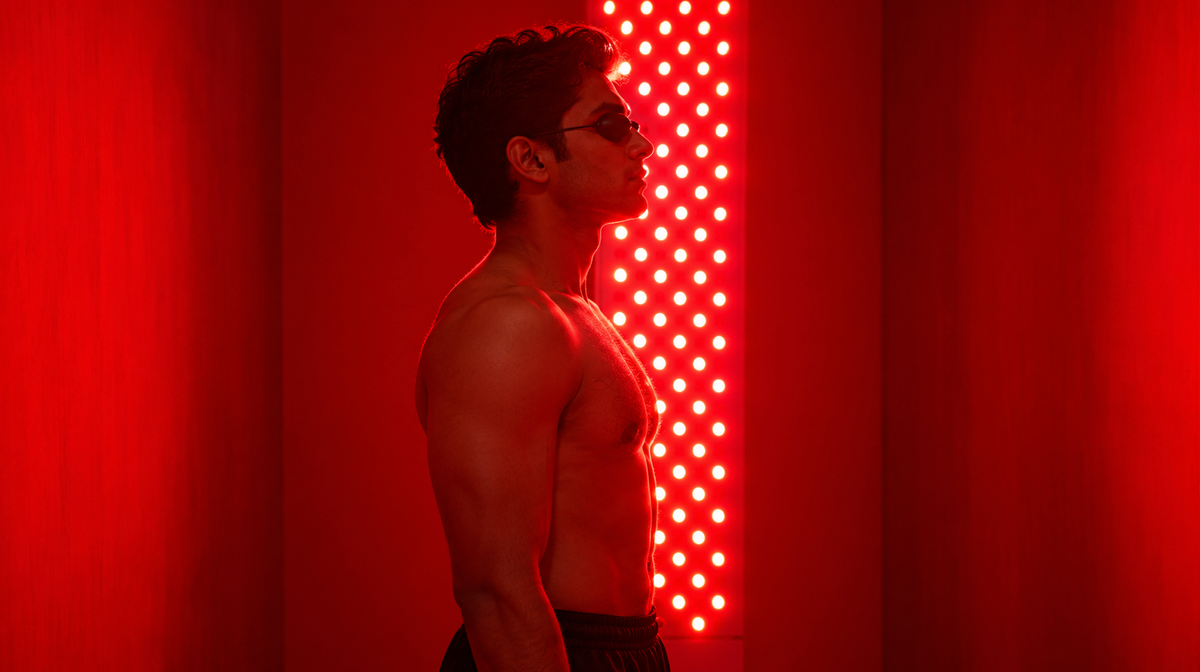
During the session, the selected area of your body is positioned at an appropriate distance from a panel containing red and near-infrared LEDs.
You may be seated, standing or lying down depending on the equipment and the area being exposed.
Most people experience:
- Bright red light
- Mild or no noticeable warmth
- No pressure or physical manipulation
- A quiet period of rest during exposure
The light should not feel painfully hot or cause burning. Inform the team if you experience discomfort, unusual warmth, skin irritation, headache or dizziness.
Protective eyewear should be used whenever recommended for the device and treatment position. Light-based procedures can injure the eyes when appropriate precautions are not followed.
Is Red Light Therapy the Same as an Infrared Sauna?
No. They use light differently and create different experiences.
An infrared sauna is designed to warm the body and encourage sweating. The session involves noticeable heat.
Red Light Therapy uses targeted red and near-infrared light with little or no significant heating. Sweating is not the goal.
Although some infrared saunas may include coloured lights, this does not automatically mean they deliver the same controlled light exposure as a dedicated RLT panel.
How Many Sessions Are Needed?
There is no single schedule suitable for everyone.
Some people use RLT occasionally as part of a recovery routine, while certain skin or rehabilitation goals may require repeated sessions over several weeks.
Results can vary according to the device, wavelength, exposure time, consistency and individual condition. Red Light Therapy is generally not a one-session transformation.
At Samyah Wellness, the exposure time is selected according to the individual, the intended purpose and previous experience.
Who Should Seek Medical Advice Before RLT?
Red Light Therapy appears to be well tolerated when used correctly for short periods, but it is not suitable for everyone. Long-term safety for every possible use has not been fully established.
Speak with a doctor before booking if you:
- Are pregnant or planning pregnancy
- Have a photosensitivity disorder
- Take medication that increases sensitivity to light
- Have active cancer or a history of cancer in the treatment area
- Have an active infection, wound or unexplained skin lesion
- Have a pacemaker or another active implanted device
- Have a condition such as lupus that may be affected by light
- Recently underwent surgery or a medical procedure
- Have significant eye concerns
Medication-related photosensitivity may occur with certain antibiotics, acne treatments and other medicines. Always disclose your medication and medical history before the session.
Red Light Therapy at Samyah Wellness
At Samyah Wellness, Red Light Therapy is offered as part of our supervised recovery services.
Before beginning, the team checks relevant health information and explains the positioning, duration and safety precautions. A blood-pressure check is completed as part of our recovery protocol.
We maintain realistic expectations. RLT is not promoted as a cure, a guaranteed method of weight loss or a replacement for medical care.
It may be used independently or included in a thoughtfully planned recovery routine alongside services such as an Ice Bath, Infrared Sauna or Compression Boots.
To enquire about Red Light Therapy at Samyah Wellness in Borivali West, call 9222 132 132. Prior appointment is required.
Frequently Asked Questions
It should not cause burning when the equipment is used correctly. Stop the session and inform the team if you experience excessive heat or irritation.
No. Red Light Therapy does not use ultraviolet radiation.
Not necessarily. The response depends on the objective, device, protocol and individual. Many researched applications involve repeated sessions.
Red Light Therapy should not be considered a primary or guaranteed method of reducing body fat.
Some people include it in their recovery routine, but it does not replace hydration, nutrition, sleep or appropriate injury management.